
Club Steward · Golf & country club management software

Country club AP software for invoice coding and GL splits

Club Steward is country club AP software where vendor invoices are entered and coded line by line, each line to a general-ledger account, a department and a club. One invoice can be coded across several lines, reusable coding rules save a coding for later invoices, and AP automation with automated GL splits can be set up on parameters the club chooses, such as the vendor.

The problem

Month end is when uncoded invoices come due.

A club buys for the kitchen, the course, the golf shop and the clubhouse, often from the same vendor on the same invoice. Somebody has to decide which account, which department and which club each line belongs to. When that happens in a spreadsheet, or in a system apart from the general ledger, the coding piles up and the close waits on it.
  • One vendor invoice that belongs to more than one department
  • Shared costs that belong to more than one club
  • Lines nobody coded, found after the statements are run
  • A bookkeeper who is in part of the week, and a controller who reviews at the end
Accounting · Books
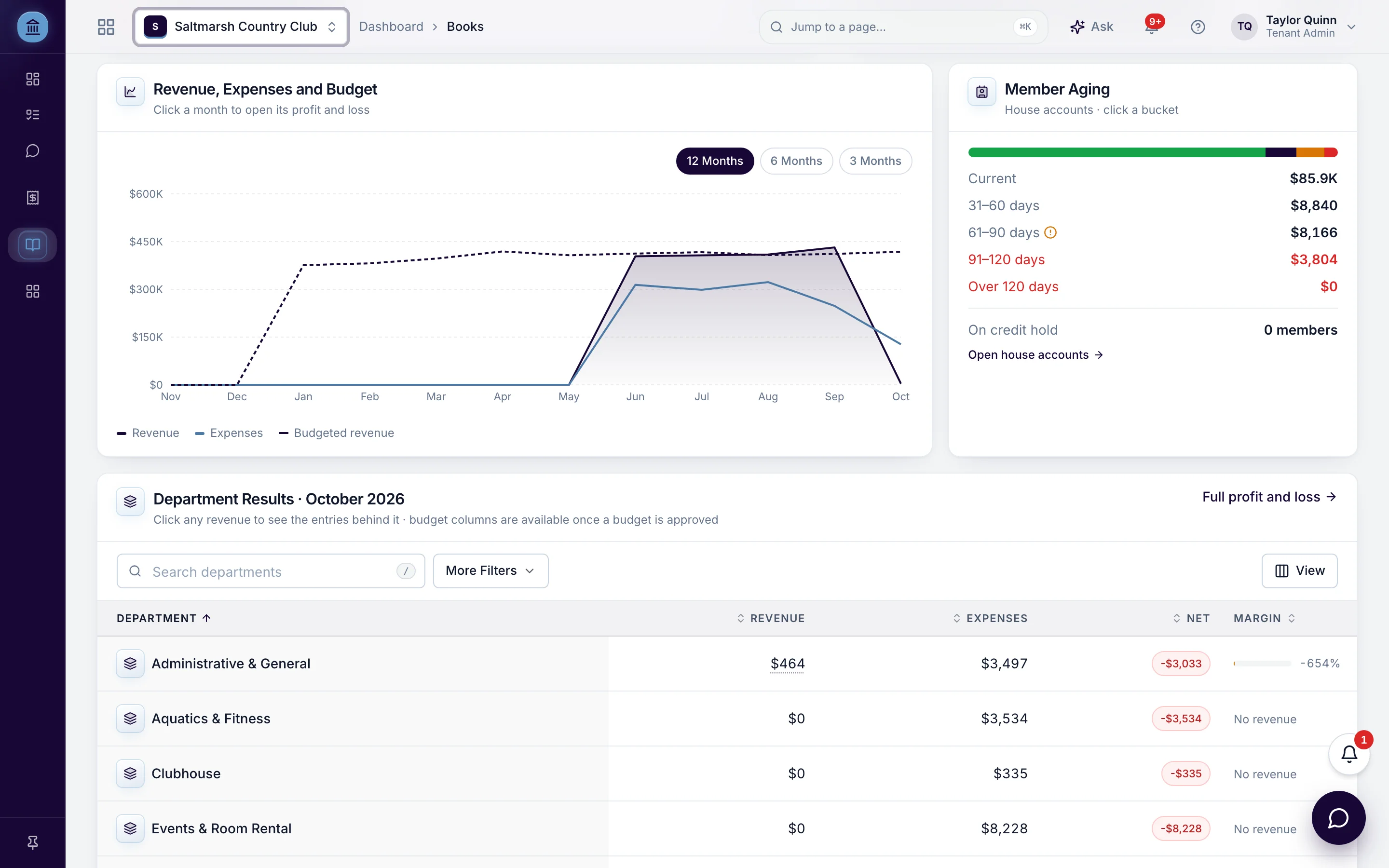
One club's books: a 12-month revenue, expense and budget chart, member account aging, and results by department
Invoice coding

How invoice coding works in Club Steward.

Vendor invoices are entered and coded in Club Steward, in the same general ledger the rest of the club posts to. Every invoice line carries three things.

General-ledger account

Each invoice line is coded to the general-ledger account it belongs to, in the same ledger the rest of the club posts to.

Department

Each line names its department, so the cost sits with the manager who owns it. A line without a department waits on a short list for the controller.

Club

Each line names its club, so the cost lands in that club's own books and still rolls up for corporate.

GL splits

A GL split is several coded lines on one invoice.

One invoice can be coded across several general-ledger lines, and each line keeps its own account, department and club. An invoice that covers the kitchen and the golf shop becomes two lines, one for each department. An invoice shared by two clubs becomes a line for each club, and each line posts to that club’s own books.

AP automation

Reusable coding rules and automated GL splits.

A coding can be saved and reused on later invoices, including a split across general-ledger accounts, departments or clubs. Rules can also be set up so invoices are coded automatically, based on parameters the club chooses, such as the vendor. We configure them with you, and every coded line still posts to its own club’s books.

  • Reusable coding rules: save a coding once and use it on later invoices
  • Automated GL splits across accounts, departments or clubs, on rules the club sets
  • AP automation on parameters the club chooses, such as the vendor
Approvals, purchase orders and three-way match

Nothing is paid until the order, the receipt and the invoice agree.

Purchasing works with approval limits and purchase orders. Three-way match checks each purchase order against the receipt and the invoice before anything is paid, so the invoice being coded is one the club ordered and received.

  • Approval limits on purchasing
  • Purchase orders matched against receipts and invoices before payment
  • A new vendor is asked for their W-9 and insurance in one step
  • Every expense line names its department, or waits on a short list for the controller
Per club or consolidated

Payables post to each club’s own books, and roll up for corporate.

Because every invoice line names its club, payables post to each club’s own books and run per club or consolidated. The same books carry bank reconciliation, budgets, period close and financial statements, so a coded invoice shows up on the department’s P&L without being keyed a second time.
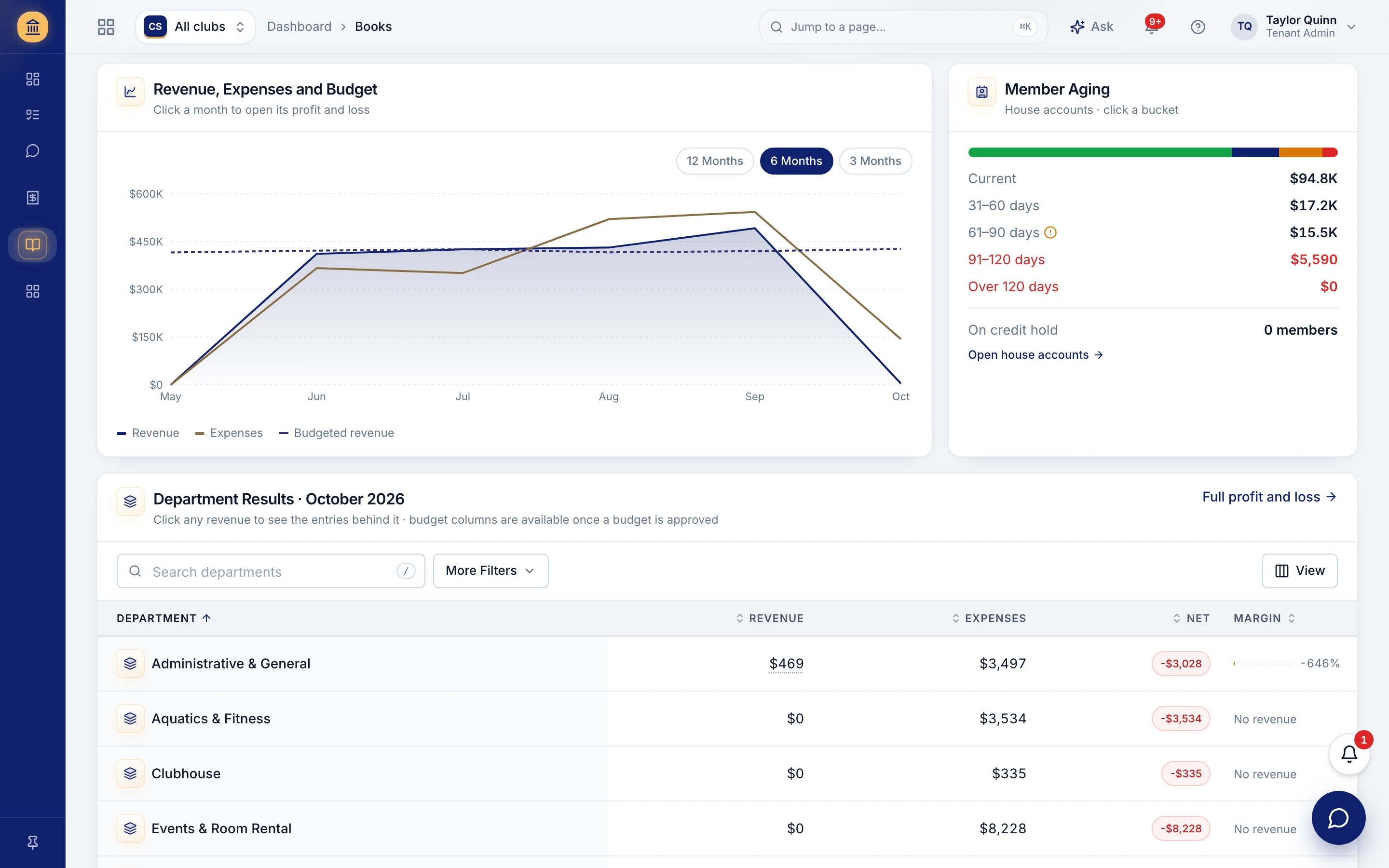
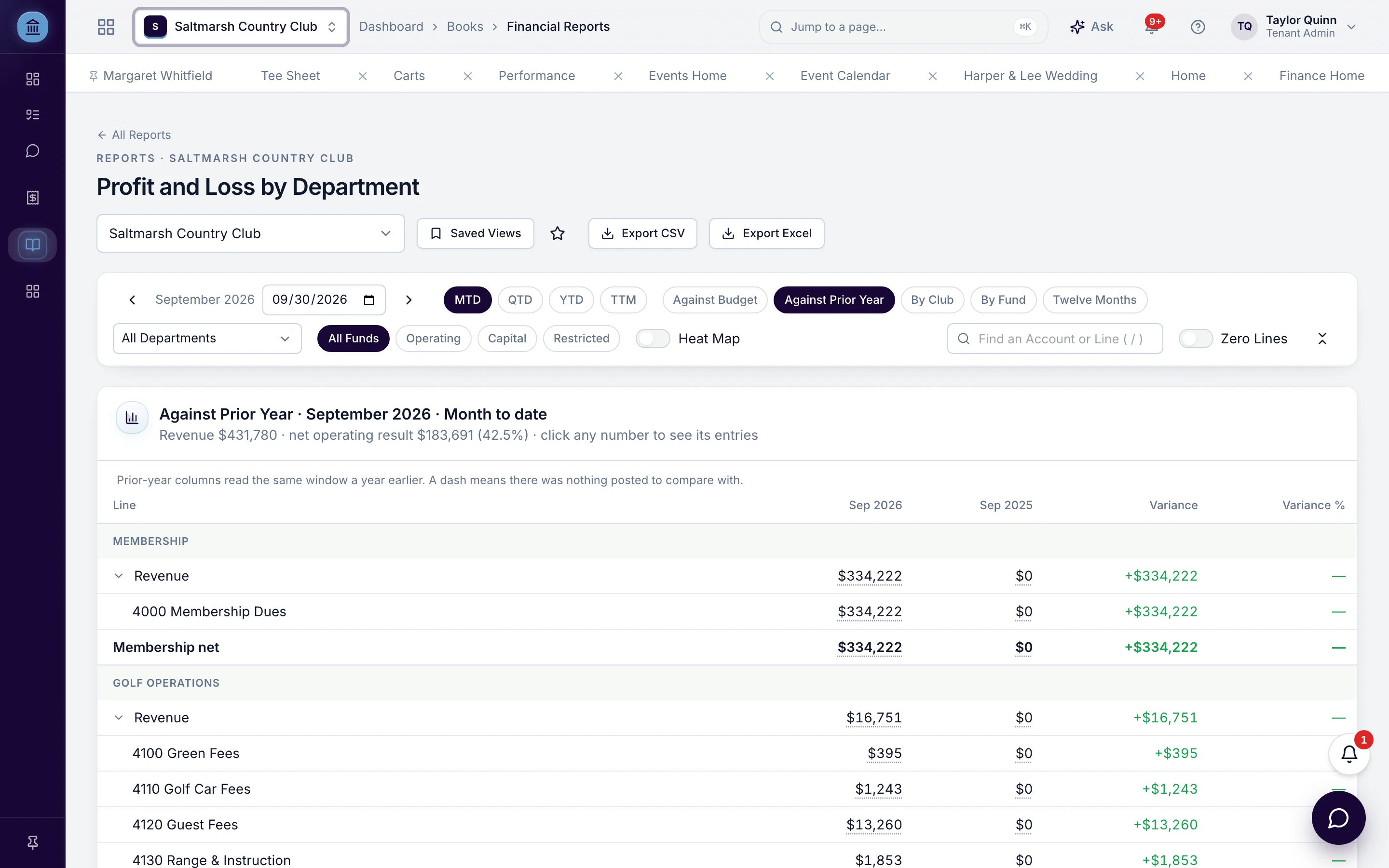
Screens show sample figures.

For part-time bookkeepers and controllers

AP that does not depend on one person being in the office.

Many clubs run payables with a part-time bookkeeper and a controller who reviews the month. Here is what each of them gets.

The bookkeeper codes as invoices are entered

Each line is coded to its account, department and club when the invoice is entered. Reusable coding rules and AP automation, set up on parameters the club chooses, mean a recurring invoice is not coded from scratch each month.

The controller gets a short list

Any expense line without a department waits on a short list for the controller, so nothing reaches the P&L without an owner.

Approvals do the checking

Approval limits and three-way match stand between an invoice and a payment, so the bookkeeper is not the only control.

A team behind the club

Ardn’s managed services team supports the club, so a small finance office is not on its own with the system.

Watch · 26 seconds

Month-end close, without re-keying.

Every outlet closes out on one screen, with cash counts. Each charge already carries its ledger account, department and club, so statements run per club or consolidated.

In the video: Month-end. And someone is still re-keying member charges into the books? With Club Steward, every outlet closes out on one screen, with cash counts. Every charge already carries its ledger account, department and club. So statements run per club, or consolidated, without re-keying a thing. Club Steward. Golf and country club management, on one platform. Book a 30-minute walkthrough.

Moving from your current system

On Jonas or Clubessential today? You move the books over.

Accounts payable is part of Club Steward’s own accounting, alongside the general ledger, bank reconciliation, budgets and period close. Clubs move over from standard exports.
  • Data comes over from standard exports: member statements, A/R aging, the trial balance and the roster
  • No integration with the old system is needed to move
  • White-glove onboarding, with managed services support
  • APIs and MCPs are available to connect other systems to Club Steward
  • PCI compliant payments
  • The club owns its data
Accounting · Balance sheet
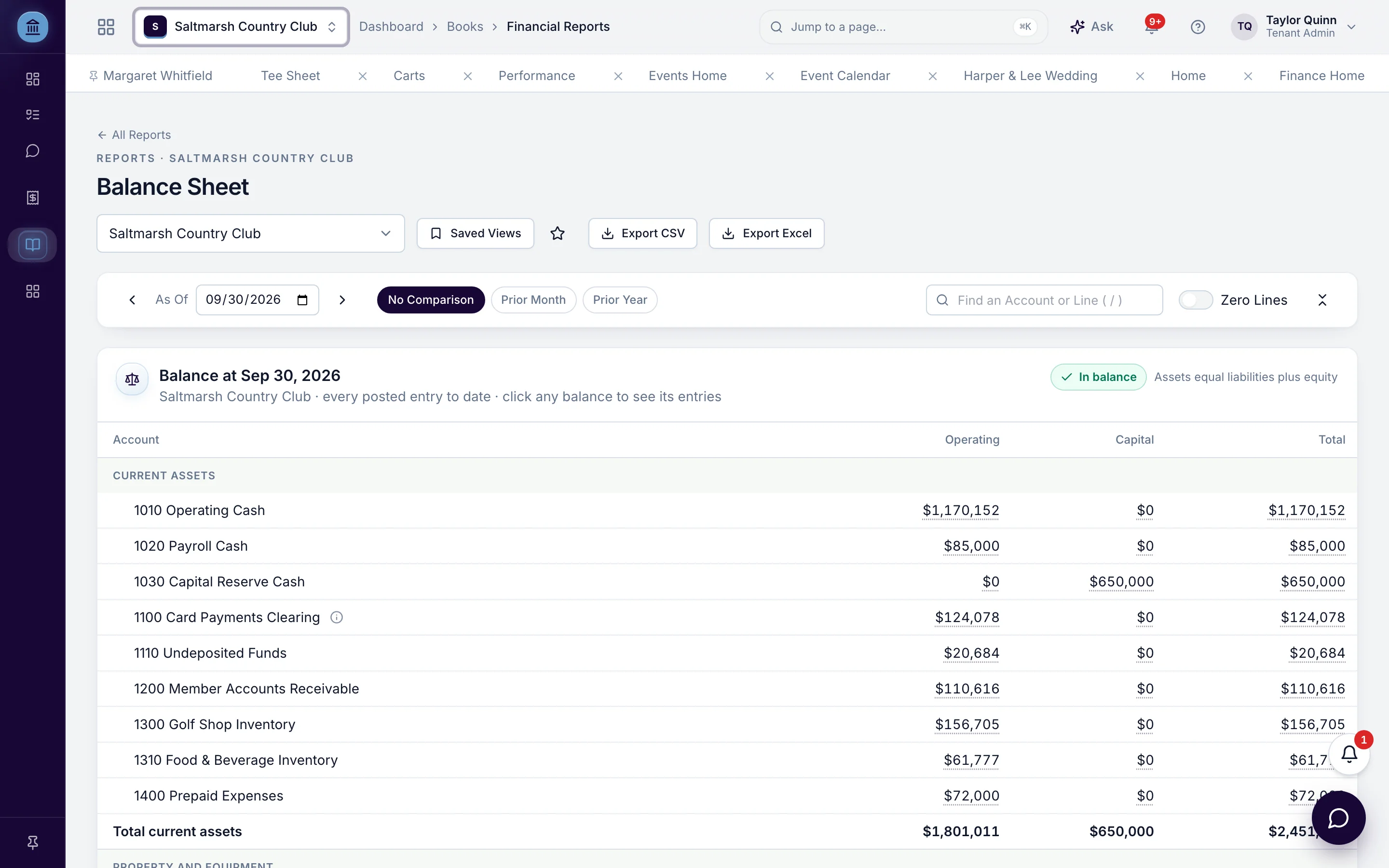
A balance sheet as of September 30 with operating and capital columns and an in-balance check

Country club accounting software: GL, AP and close · Member dues billing software for private clubs · Books per club or consolidated across a portfolio

Want to see one of your own invoices coded? Bring a vendor invoice that covers more than one department, and we’ll code it on a sample club in 30 minutes.

Questions

Country club AP software: what controllers and bookkeepers ask

What is the best AP software for country club invoice coding?
The best fit depends on where the club keeps its books. If invoices are coded in one place and the general ledger lives in another, every invoice is handled twice. Club Steward fits clubs that want payables inside the club's own accounting: vendor invoices are entered and coded in Club Steward, each line to a general-ledger account, a department and a club, and they post to that club's own books. Reusable coding rules save a coding for later invoices, and AP automation can be set up so invoices are coded automatically on parameters the club chooses, such as the vendor. Ask any vendor on your shortlist to code one of your real invoices in a walkthrough.
How do GL splits work in country club AP software?
A GL split is several coded lines on one invoice. In Club Steward one vendor invoice can be coded across several general-ledger lines, and each line carries its own account, department and club. A single invoice for the kitchen and the golf shop becomes two lines, each posted to its own department, and an invoice shared by two clubs becomes a line for each club, posted to each club's own books. A split can be saved as a reusable coding rule and used again on later invoices, and automated GL splits can be set up on parameters the club chooses, such as the vendor.
Can a part-time bookkeeper run AP for a country club?
Yes. Invoices are coded line by line as they are entered, reusable coding rules keep a recurring invoice from being coded from scratch each month, and AP automation can be set up so invoices are coded automatically on parameters the club chooses, such as the vendor. Purchasing follows approval limits, and three-way match checks the purchase order against the receipt and the invoice before anything is paid. Any expense line without a department waits on a short list for the controller, so a part-time bookkeeper is not the only check on the books. Ardn's managed services team supports the club as well.
Does Club Steward integrate with Jonas?
Club Steward replaces the club's accounting rather than bolting onto it. Accounts payable, with reusable coding rules and AP automation the club can have set up, the general ledger, bank reconciliation, budgets and period close are part of Club Steward itself. Clubs move over from standard exports (member statements, A/R aging, the trial balance and the roster), so no integration with the old system is needed. APIs and MCPs are available for connecting other systems to Club Steward.
How are vendor invoices approved before they are paid?
Purchasing works with approval limits and purchase orders, and they apply whether an invoice was coded by hand or by a reusable coding rule. Three-way match checks each purchase order against the receipt and the invoice before anything is paid, and every expense line names its department or waits on a short list for the controller.
How does a club on Jonas or Clubessential move its accounts payable to Club Steward?
Accounts payable is part of Club Steward's own accounting, so the club moves its books rather than connecting two systems. Data comes over from standard exports: member statements, A/R aging, the trial balance and the roster. During onboarding we configure reusable coding rules and automated GL splits with you, on the parameters your club chooses. Onboarding is white-glove, managed services support is available, and the club owns its data.
Free & no obligation

See invoice coding on a live club

Tell us how your club codes vendor invoices today and what slows the month-end close. We reply within 4 business hours to set up your walkthrough.

We reply within 4 business hours · No obligation

We'll only use this to reply about your project. No spam, ever.

Every invoice line, coded once. Every club.

See a vendor invoice coded across departments and clubs, saved as a reusable coding rule, matched to its purchase order and posted to each club’s own books.